This English version has not yet been reviewed by a person from the association.
Position paper
Our direction
In one minute
Germany has a lot of good things. But a lot no longer works the way it should. We want to repair what is broken and build what is missing. By 2035 the country should work again; by 2050 Germany and Europe should be among the leaders again. No side can do this alone – only all of us together.
What this page is
This is not a list of promises and not a finished programme. It is our compass. We measure our decisions against it, especially when they are uncomfortable. It is for everyone in the middle of our society who wants to pitch in and expects politics to deliver again.
Stage 1 of 7
Where we stand
The house we inherited
Imagine Germany as a big old house. It is solidly built and stands in a good place. It has plenty of substance. We can be proud of that.
But there is mould in the walls. The pipes are rusty. The wiring is outdated. And the garden is overgrown.
A fresh coat of paint on the front won't help. Hiding the mould behind new wallpaper only postpones the damage. It needs a thorough renovation, from the cellar to the roof.
This isn't doom-mongering. If you want to fix something, you first have to look honestly.
How you notice it
Examples of how this can show up in everyday life.
An application sits at the public office for months, and nobody can tell you why. The electricity bill is high, and businesses wonder whether to keep investing here. You fill in a form on the computer, print it out and then hand it in in person anyway. There are more and more older people and fewer younger people in work, and businesses urgently need skilled workers. Immigration lacks a clear policy, and a lot is heading in the wrong direction. And politics announces a lot, but little reaches everyday life. That's how trust is lost.
Germany can do more
Fewer young people, more older people. Fewer and fewer people in work have to provide for more and more older people.
Technology changes everything. Artificial intelligence, automation and robots are changing businesses, jobs and public offices. Faster and faster.
Competition. Money, talent and companies can choose where they go. Germany has to be the better choice, not the more expensive one.
A state that delivers. A state that only announces and doesn't deliver loses trust. It has to decide faster and follow through consistently.
Everything we need is already here. We just have to bring it together again.
Stage 2 of 7
Where we want to go
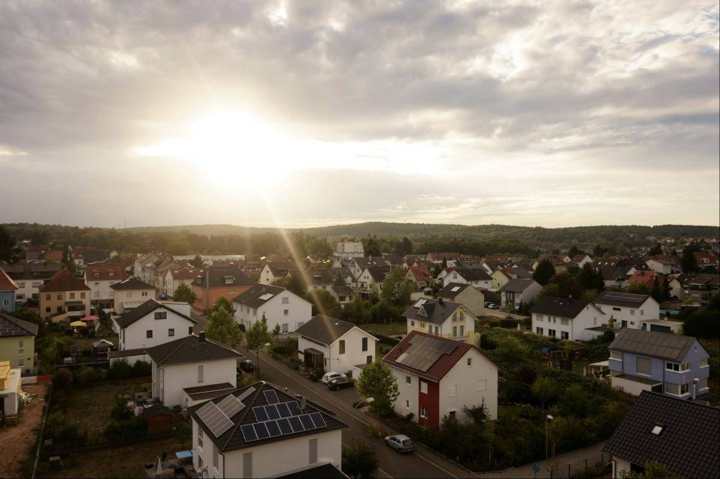
A day in 2035
Imagine a perfectly normal day in 2035.
You apply for something at the public office. It's done online, and the decision comes in weeks, not years. You know who is responsible. The electricity bill no longer scares you. When you work more or learn new skills, you notice it at the end of the month. And if you want to start a company, nobody stands in your way with forms.
2035 is not perfect. But it is the moment you feel: this country works again. It is a place where people like to stay. Effort gets you ahead here, whether as a skilled worker, a founder or a family.
Imagine it simply works.
A perfectly normal day – the way it could be. Not perfect. But noticeably easier.
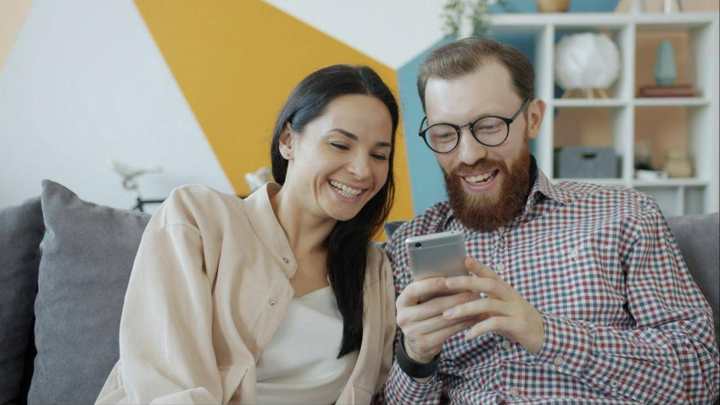
Done – in weeks, not years.
You submit your application online. The decision comes in weeks, not years. And you know exactly who is responsible.
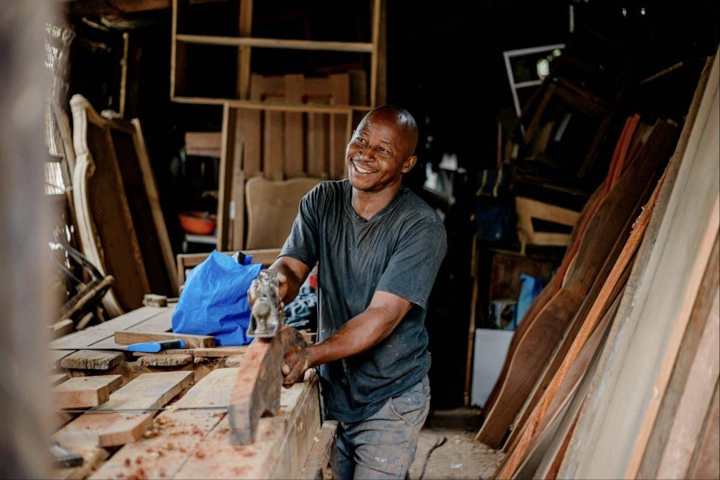
Doing more pays off again.
When you work more, take on responsibility or learn new skills, you notice it at the end of the month. Visibly.
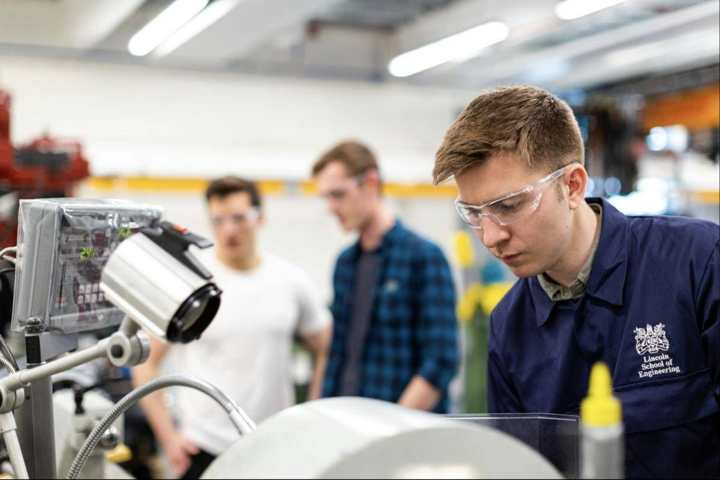
If you want to learn, you get ahead.
From nursery through vocational training to further education, everything fits together. Education is once again the way up.
An idea – and nobody slows you down.
Want to start a company? Nobody stands in your way with forms. Innovation needs room to breathe, not paperwork.
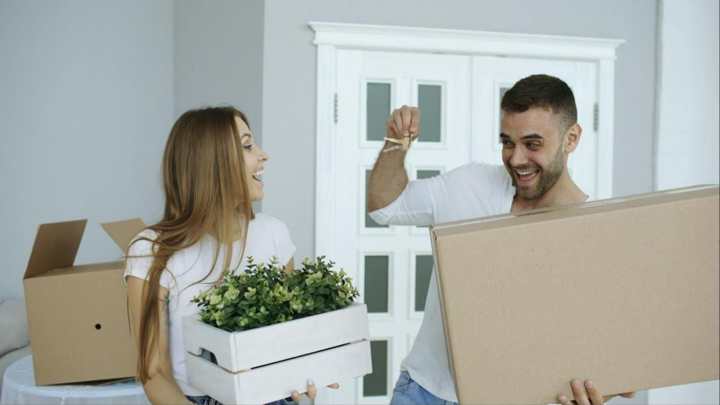
A home that suits you.
You find a flat that matches your income – in the city or in the countryside. And a home of your own is once again a goal you can reach.
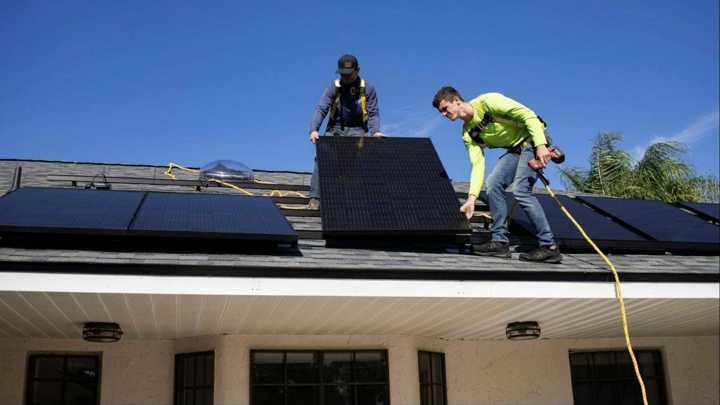
The bill no longer scares you.
Energy is secure and affordable. Businesses invest here again because electricity, permits and rules are reliable.
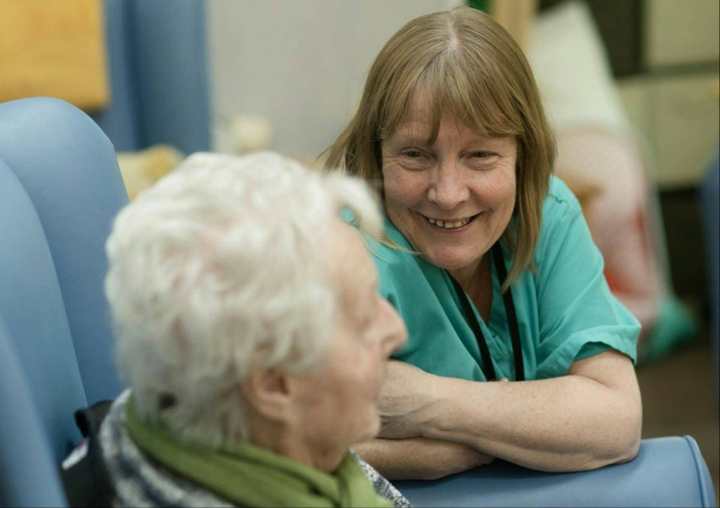
Living independently for longer.
Health means prevention and support, not just managing illness. Good care is available in the city and in the countryside.
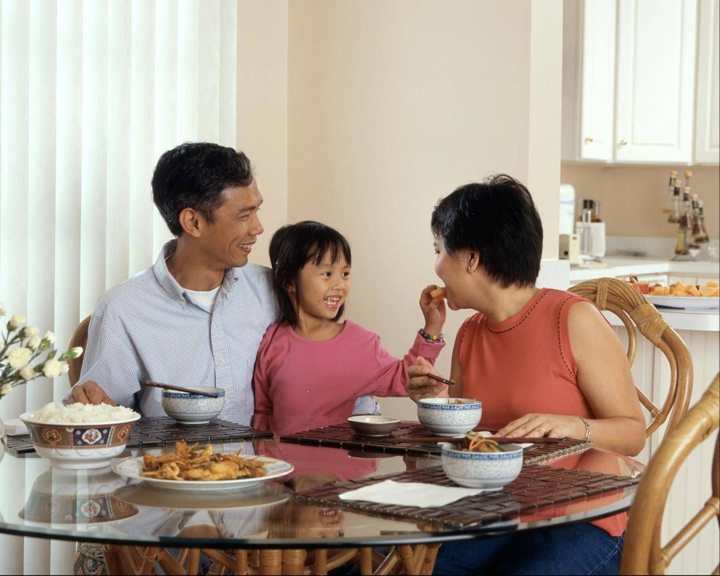
Part of something shared.
You feel once again that we belong together. Germany is a place where people like to stay – as skilled workers, as founders, as families.
This is how Germany should feel in 2035: a country that works again. We'll get there step by step. And the first step is today.
And after that: 2050
By 2050 Germany and Europe should be among the leaders again. Germany leads in important future technologies. It has a strong industry and is not dependent on others for critical technology. And it remains socially stable because our prosperity is secure.
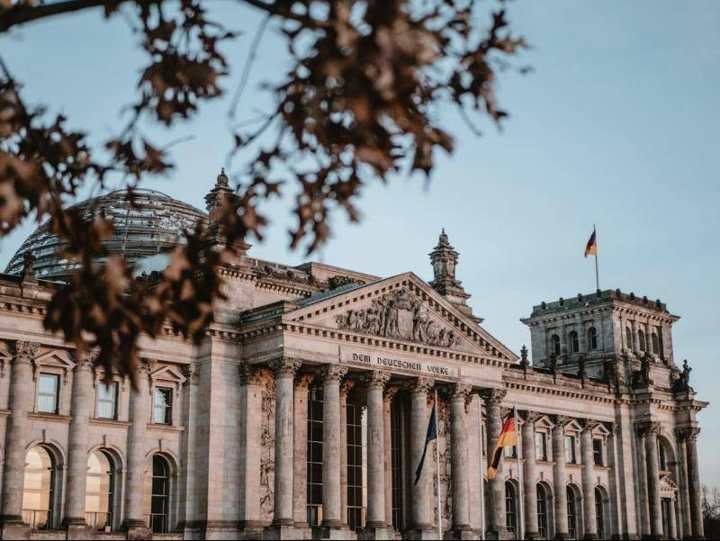
This includes a big goal for Europe. By 2050 at the latest we want a United States of Europe. It should be democratically elected and built as a federation of countries. One clear rule applies: what can be solved locally is solved locally. Today's EU administration is limited to the important shared tasks. Germany contributes from its own strength. The countries of Europe keep their own culture.
Our horizon
Germany first. Then Europe.
Energy, security, technology, the economy: there is a lot we can only secure together with our neighbours. Germany should first become strong again at home – and use that strength to bring Europe together. As a strong partner, not as the one in charge.
Stage 3 of 7
What needs to be done
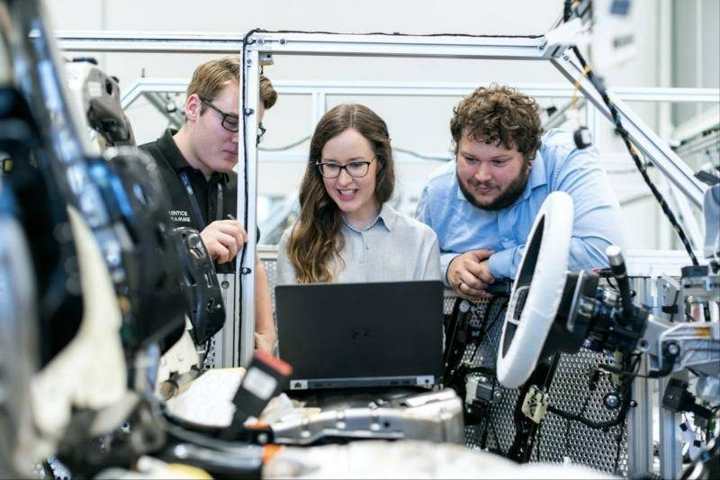
Repairing alone is not enough. An old model that runs again is still an old model. Just dreaming of the new isn't enough either. If you forget the foundations, you quickly end up on shaky ground.
That's why both apply at the same time. We repair what doesn't work. We build what is missing. And we tear down what is no longer needed and stands in the way of the future.
Everything is connected. Without good education, no strong economy. Without a strong economy, no money for the state. Without a state that works, no trust. And without trust, nobody is willing to try something new.
That's why our three tasks are: Repair. Build anew. Stick together.
Our country is like a big old house.
Solidly built, in a good location, with plenty of substance. We can be proud of that. But the pipes are rusty, the wiring is outdated, and there is mould in the walls.
A fresh coat of paint on the front won't help. It needs a thorough renovation – from the cellar to the roof. And nobody renovates a house this size alone.
Repair.
Fix what doesn't work: public offices that decide quickly. Energy that is secure and affordable. Education that carries people forward.
Build anew.
Build what is missing: new strength with tomorrow's technology – developed here, built here, sold to the world.
Stick together.
Make sure progress reaches everyone: work pays, and nobody is left behind.
Task 1 · Repair: what has to work again
A good state is not an ever bigger state. It is a state that gets results. It sets priorities and decides. And it holds back where it only produces paperwork. It doesn't do everything itself. It makes sure others can act quickly.
More on this — click to expand:
Less paperwork, faster decisions
Permits and planning have to become much simpler. They need a fixed deadline. Laws should be written so that people can understand and apply them. Digital should be built in from the start. The state sets the framework and doesn't regulate every single case. Fewer rules, more impact.
Security
Security is the foundation of freedom, prosperity and trust. A state that cannot protect loses its legitimacy. That applies on the street in everyday life. But it also applies to power grids, data and computer systems. And it applies to the defence of our country and of Europe.
Energy
Energy follows a clear order. First, electricity has to flow securely and reliably. Then it has to be affordable. And it has to be sustainable in the long run. Energy should be sufficient and stable – and affordable.
Education
Education is the most important thing a country has. It decides whether new technology leads to social mobility and whether integration succeeds. Nursery, school, vocational training, university and further education have to fit together like a ladder. Where a rung is missing, people fall out. Then skilled workers are missing, and society drifts apart. Learning should prepare people for what will be needed tomorrow.
Immigration
Germany needs well-trained people who come here and pitch in. That requires clear procedures and consistent integration. Asylum and immigration are two different things. They have to be handled separately. Managing migration means securing the future.
Democracy you can experience
You should be able to see who decides and who is responsible. And you should know how you can change something. Parliaments must effectively scrutinise the government and its spending. That applies in the municipality, the federal state, the federation and in Europe. Participation should be meant seriously, without blocking everything. Free media, a strong opposition and independent courts are part of it. If the state interferes with your freedom, it has to justify that. The interference must be proportionate, and a court must be able to review it. When tasks move to Europe, there must be clear responsibilities and real scrutiny. Democracy regains trust when it involves people audibly and delivers visibly.
Clear boundaries
Germany is a free, democratic country governed by the rule of law. It must never become communist or fascist. We oppose every form of tyranny. That applies to ideas in which the group is everything and the individual nothing. It applies to ethno-nationalist thinking, to plans for expropriation and enforced conformity, to personality cults and contempt for human beings. And it applies to political violence.
We oppose all extremism: from the right, from the left, religious or otherwise motivated. Antisemitism and racism have no place in our open society. The state must protect our free order with the means of the rule of law. Peaceful criticism is part of democracy, even when it is fundamental and uncomfortable.
Our yardstick is the dignity of every human being. That includes property, diversity of opinion and the separation of powers. It includes freedom of expression and equal rights for all. Tolerance applies to all who are tolerant themselves. Anyone who fights the open society cannot count on a naive state.
State and religion
The state is independent of religions. It does not let itself be captured by any world view. It protects freedom of religion. It treats all peaceful faith communities that uphold the Basic Law equally. Our Christian-influenced culture gives nobody fewer rights. The state does not tolerate parallel systems alongside the law. If extremism attacks human dignity or our free order, the state must act clearly and decisively. Peaceful cultural differences are part of a free society.
Health and care
Whether a state works, you notice at the doctor's and in care. You notice it with the ambulance service, at the corner shop, on buses and trains and with public services online. Health should not just manage illness and shortage. It should help you live a long, self-determined and active life. That applies especially in old age and to people with disabilities. That needs more prevention and support, and care that fits together seamlessly. And it needs reliable basic services in town and country that you can actually reach. Artificial intelligence and new technology can help and relieve staff. For that, they must be well integrated. That way Germany can even become a leader here.
Housing, ownership and liveable regions
Affordable housing is a bottleneck for many – in the city and in the countryside alike. Our approach: build faster and more simply, make better use of what exists, make a home of your own achievable, rents that fit people's lives, and make the countryside attractive again.
Task 2 · Build anew: where new prosperity comes from
Repairing makes the country work again. Building anew makes it strong for the future again. This is not about running the state like a company. It's about the question: how will we earn our prosperity in the future?
Our answer: we combine the strength of our industry with tomorrow's technology. We can't lead everywhere at once. That's why we focus on a few fields, and do them properly:
- Artificial intelligence
- Space, satellites and communications technology
- Robots and machines that work autonomously
- Computer chips, new materials and high-performance networks
- Technology that supplies and stores energy and makes us crisis-proof
- Biotechnology
This also includes the new infrastructure this technology needs. We don't just want to use this technology. We want to develop it here, build it and sell it to the world. Secure old strengths, build new ones.
Concentrate instead of spreading thin
Excellence doesn't come from spreading money evenly. It comes where money, bright minds, research and drive come together. That's why Germany needs a few research centres that are visible worldwide. A Germany Fund should pool money for roads, networks, research and future fields. It serves German interests alone, even when it works with partners in Europe. For joint European projects there could also be a separate Europe Fund. Who controls it and who contributes what would have to be regulated separately.
The state makes new things possible
The state should make new things possible, but not play entrepreneur itself. It provides rules, networks, spaces for experimenting and good conditions for investment. Innovation needs room to breathe, not paperwork.
Technology for the whole country
Artificial intelligence and automation are not only changing industries. They are also changing work, school, public offices and the way we talk to each other in public. Anyone who sees this only as a matter for business creates progress for a few and insecurity for many. We want work to become more productive and social mobility to remain possible. Public offices should get better, and our public debate should stay strong. Technology must serve the whole country.
Task 3 · Stick together: how progress reaches everyone
Social security and a strong economy are not opposites. One lives off the other. Companies create jobs and should make profits, within clear and fair rules. The state itself makes no profit. But from what is generated, we pay for investment, social security and provision for crises. Surpluses are therefore nothing disreputable. They help us get through crises. The welfare state protects everyone who cannot help themselves. It helps those who want to get ahead through difficult transitions. In the long run it only works if it is paid for out of what we earn.
Fair between generations
There are more and more older people and fewer younger people in work. That's why we have to become more productive and stay able to work for longer. We have to put more aside for the future and think carefully about what the state spends money on. Ongoing expenses must not be permanently shifted onto children and grandchildren. And anyone who keeps postponing necessary investment weakens the country too. Investing where the future is created and building reserves for bad times: these go together. Constantly spending more than you take in must not become normal.
Public money is not money without a sender. It comes from people and businesses, from neighbours, friends and families. Politics must not write cheques that others have to pay. It has to say who pays for a benefit and who bears the risk. Anyone who takes on debt has to say what it costs and what it brings. Because if a state can no longer pay, savers and investors can be hit in the end.
Anyone who works and saves should be able to build something: a home, a cushion, provision for old age. Property makes people free and independent. No generation may permanently spend more than the next one can bear.
Work has to pay
Anyone who works should have noticeably more than someone living on benefits. Anyone who works more, takes on responsibility or learns new skills should visibly keep more of it. That applies from the minimum wage well into middle incomes. Full-time work must really pay off compared with part-time. More effort must not be almost eaten up again by taxes, contributions and lost benefits. The minimum wage protects against exploitation. But it must not make work so expensive that jobs disappear. And it must not level out differences in skill and responsibility.
Nobody is left behind
Artificial intelligence and new technology make a lot of work faster. That can bring all of us more prosperity. But it must not be the case that a few generate more and more while many fall behind. Anyone who wants to achieve something will not be left alone. Not everyone is an entrepreneur, and suitable work isn't always available right away. Then help is needed: further training, support in moving into a new job, in becoming self-employed or in founding a company. The help builds on what you can already do. It depends on your situation and on how far you would otherwise fall. It should make a real fresh start possible, not just secure the bare minimum. The dignity of every human being always applies, no matter what they earn.
What holds us together
Cohesion doesn't come from nice words. It comes from fair rules, fairly shared burdens and real opportunities. Without them, divides grow: between town and country, young and old, locals and immigrants. And between those who contribute a lot and those who receive help. Politics has to address these tensions and resolve them instead of talking them away. Nobody should permanently feel like a loser or worth less.
Family comes first for us. After that, we strengthen every community in which people reliably stand up for one another. That shows in raising children, in caring, in everyday life and in crises. The state should support this. Anyone who takes responsibility for others should benefit from it. That brings more closeness and less bureaucracy. The state has to step in less often itself. That lowers costs and keeps the state's power limited. Where families and communities are overwhelmed, the state continues to help.
A free society reliably protects minorities in their rights and dignity. But it does not elevate them as symbols. And small groups should not permanently get more power to decide or block than corresponds to their size.
For us, equality means equal opportunities, equal respect and equal access to education, jobs and responsibility. We don't want rigid state quotas that ignore suitability and performance. What matters is that the best-suited people are in the right place. Where groups are missing, better support and training help. Lower standards don't.
Cohesion comes about when differences are fairly regulated and opportunities are genuinely shared.
A task for all: together with Europe
We can only secure our economy, our technology and our security together with Europe. Because markets, money, energy, defence and technology work across borders today.
Germany should first become strong again at home. With that strength it should bring Europe together. As a strong partner, not as the one in charge. It contributes reliability, economic strength and drive, and respects the cultures of others. In doing so, it bears a special responsibility for a fair balance that all partners can live with. A strong Germany needs a strong Europe, and a strong Europe needs a strong Germany.
Europe holds together
Different opinions are part of Europe. We have to fend off targeted attempts to divide Europe. Legitimate criticism and the distinct character of each country are not suppressed in the process. Who contributes what and who gets what out of it must be decided transparently. Large countries bear more responsibility. Small countries must have a real say.
Europe as the top level
Our state is built in levels: municipality, region, federal state, federation. In the medium term, Europe should become the top level. Where acting together is clearly better, Europe should decide. That applies above all to defence, a common market for money and capital, competition and the supply of vital goods. There, elected representatives decide, and parliaments scrutinise them. Everything else is regulated as close to people as possible. Every competence Europe has must be justified and reviewed regularly. What Europe can't do better goes back down.
Not open to blackmail
When it comes to vital goods, technology and industry, Europe must not be open to blackmail. That requires its own development and production and reliable networks. Add to that reserves, recycling, substitutes and several reliable suppliers. Where outages would really endanger us, we plan economy, research, production and money together. A possible Europe Fund can help with this. The Germany Fund remains committed to German interests alone.
Freedom and diversity
Europe should preserve its values, languages and cultures and protect the freedom of every individual. That requires free elections, open debates, independent courts and a government that is held to account. Decisions in Europe must be understandable, and you must be able to influence them. Anyone who hands responsibility to Europe must not leave a gap in accountability.
Europe in the world
Towards the outside world, Europe should speak with one voice. Germany helps to find common positions and to stand by them reliably. Step by step, Europe should take on this task for all EU states. How democratic a country is helps decide whether we see it more as a partner or as a rival. We treat all countries with respect. We work in alliances, trade and take part in international organisations when that benefits Europe. We represent Europe's interests clearly and on the basis of our shared values. In doing so, we lecture no one. What counts are the consequences for security, prosperity and freedom in Europe.
Stage 4 of 7
How we do it
Nobody renovates a house this size alone. Certainly not when everyone only tinkers in their own corner. Thinking in camps won't get us anywhere. It takes team spirit. Together we renovate the house we all live in.
Remember the summer of 2006? That feeling of a whole country believing in something together? Not everyone had the same task. But everyone pulled in the same direction.
Cohesion doesn't mean everyone has to be the same. It comes about when you experience that effort counts, the rules are fair, and we solve big tasks together. It's about more than a system that runs again. It's about a country we can be proud of again.
That requires setting priorities. Not everything can happen at once. Some things we deliberately leave out or do later. Anyone who promises everything loses trust. Anyone who decides gives direction.
The path
Big goals are reached in stages.
These are our next steps. You can be part of every one of them.
- Now
We're getting started.
Our position paper is up for a vote. Now we're collecting what doesn't work in your everyday life – and people who want to join in.
- Next
Local groups.
Problems arise locally. That's why we tackle them locally too: in your town, in your district.
- After that
First concerns on the table.
The first thoroughly checked topic goes to where decisions are made – for example as a petition to the Bundestag.
- Then
Together with Europe.
The movement in Germany becomes a movement in Europe – together with people in our neighbouring countries.
- 2035
Germany works again.
- 2050
Germany and Europe lead – in tomorrow's technology.
Stage 5 of 7
What we stand for: five values
Stage 6 of 7
Why it takes all of us
All of this only succeeds if many people take part. Why that is so is explained on a page of its own.
Stage 7 of 7
In closing
Picture the house once more. This time in 2035.
The walls are dry, the mould is gone. The pipes are clear. You press the switch, and the light comes on. The garden is in bloom again. The door is open, and inside people are sitting together at the table.
It isn't perfect. But it works. And everyone who walks past can see: many people pitched in here.
2035 is not a dream state, but a country that works again. 2050 is not a distant goal that falls from the sky. It is the result of many right decisions in the right order: repair, build anew, stick together. Germany can once again become a country that works, grows and holds together. For that, we have to be willing to make the necessary decisions.
If we all pitch in together, we can fix this.
The future is not a promise. It is a task. And it will only succeed if we carry it together.